Technologies and frameworks
A technology approach built around compatibility, reliability, safety and long-term operation.
This page presents the technology classes, engineering frameworks and professional interactions we work with. It does not claim formal partnerships, reseller status or exclusive manufacturer relationships unless expressly certified.
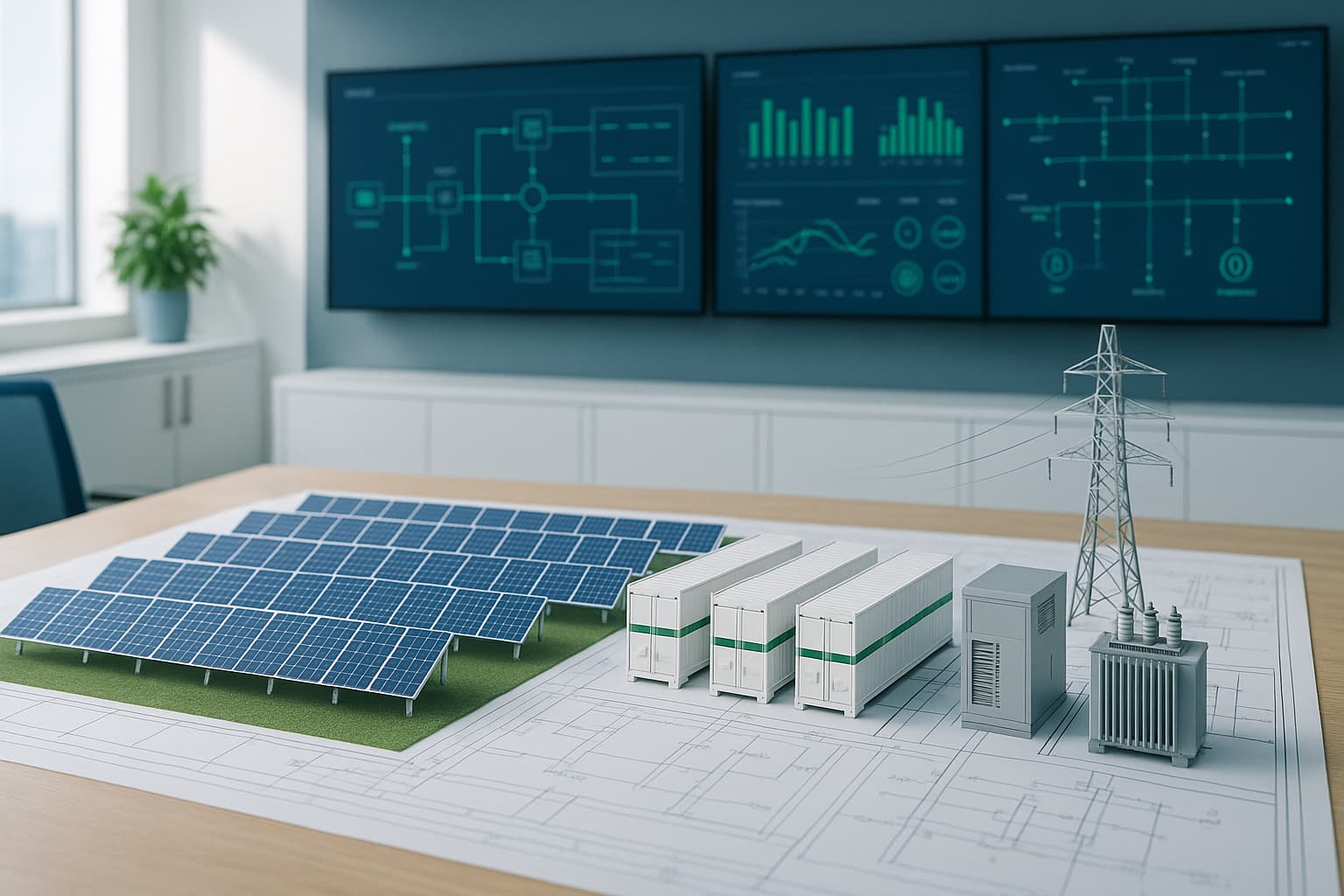
Technology context
The right energy project begins with the right technology ecosystem.
In RES, storage and gas-steam capacity, technology selection affects yield, grid compatibility, fire safety, operating costs, warranties, service and future asset value. We therefore treat equipment as part of the overall project framework.
Technology ecosystem
We verify whether generation, storage, grid interface and control systems work as one reliable system.
Generation
PV, wind, hydro, gas and hybrid configurations.
Storage
BESS, PCS, BMS, degradation and safety concept.
Grid interface
Substation, protection, metering, route and capacity.
EMS / SCADA
Monitoring, operating modes, data, control and optimization.
Technical compatibility
Equipment, protocols, protection and operating mode.
Safety
HSE, fire risk, incident scenarios and control.
Lifecycle
Warranties, spare parts, service and operating costs.
Bankability
Documents, contract schedules and financing applicability.
Selection objective
Technology selection based on resource, land, grid, operating mode, safety, service support and financial model
Comparison of technical parameters, warranties, bankability, operating history, spare parts and integration requirements
Attention to compatibility between generation asset, storage, EMS/SCADA, protection, metering, grid operator and market model
Technology capabilities
Energy competence focused on applicable solutions, not a decorative list of brands.
We work with project teams, suppliers, contractors, lawyers, financial advisers and operators when the real applicability of a technology or configuration must be assessed.
Generation technologies: PV, wind, hydro, gas turbines, steam cycles and hybrid configurations
Storage and control: BESS, EMS, SCADA, protection, metering, monitoring and optimization
Infrastructure: substations, transformers, switchgear, cable routes, connection facilities and servitudes
Documentation frameworks: technical briefs, design disciplines, HSE, environmental regimes, contract schedules and due diligence
Working model
A flexible model according to our role in the project.
We can work as an independent technical adviser, owner engineer, due diligence party, design coordinator or expert support to an investor, legal or financing team.
Technology selection
Comparison of options, technical parameters, warranties, service, compatibility and lifecycle against the specific project.
Integration into the project framework
Connecting equipment, grid requirements, design disciplines, contracts, permits and operating mode into one manageable scope.
Independent review
Review of offers, technical proposals, contract schedules, performance guarantees, project readiness and risks before commitment.
Equipment, systems and working frameworks
Technology classes and documentation frameworks relevant to the projects we develop and assess.
The list is an orientation toward types of technologies, systems and processes. It is not a statement of official partnership with a specific manufacturer or supplier.
Mono/bifacial panels, warranties, degradation, bankability and land applicability
String and central solutions, MPPT, grid functions, monitoring and service
Capacity, rotor, wind class, micrositing, transport and operation
Water resource, head, flow, operating regime and hydraulic compatibility
Cells, rack/container systems, PCS, BMS, degradation and safety concept
Asset control, monitoring, dispatch logic, alarms and reporting
Relay protection, automation, metering, synchronization and grid requirements
Transformers, switchgear, substations, cable routes and connection facilities
Geospatial analysis, land, routes, constraints and project layers
Solar, wind and hydrological resource, measurements, models and bankable data
Capacity, fuel, efficiency, emissions, operating mode and maintenance
Steam cycle integration, heat balances, reliability and operating modes
PLC, control, metering, telemetry, operational visibility and integration
Contracted energy, balancing, guarantees of origin and revenue scenarios
EIA/screening, protected areas, water regimes, noise, waste and biodiversity
Construction and operation safety, BESS fire strategy and emergency readiness